

![[Review] WEST COAST CHILL](https://www.energydrinkmania.net/img/lang_en_pc.png)

![[Review] WEST COAST CHILL](https://www.energydrinkmania.net/img/lang_en_sp.png)
WEST COAST CHILL
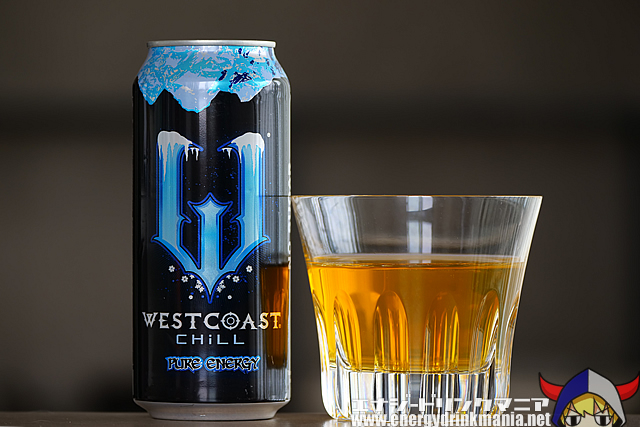
In 2012, WEST COAST CHILL was released in the United States in a can equipped with the world’s first automatic cooling system.
By pressing a button and waiting a moment, the can’s temperature would drop by about 30°C, letting you enjoy an ice-cold energy drink.
After that, cans with the automatic cooling system disappeared, and the drink began to be distributed in regular aluminum cans.
The can I’m reviewing here is a WEST COAST CHILL that I managed to get in Los Angeles in 2014.
In this review, in addition to detailing the flavor, I will also take a closer look at the design and the structure of the automatic cooling system as historical documentation.
WEST COAST CHILL
| Manufacturer | WEST COAST CHILL |
|---|---|
| Country of Origin | USA |
| Price | 2.99 USD |
| Flavor | Chemicals |
| Total rating | ★★☆☆☆ |
 Author: Energy Drink-kun
In 2001, while living in the United States, I encountered energy drinks through the dance scene and was deeply impressed. After returning to Japan, I found that energy drinks were considered novelty beverages, so I established a comprehensive website in 2013 to share the true appeal of energy drinks. As an energy drink enthusiast, I began drinking them seriously again, collecting over 8,000 varieties of energy drinks from various countries. I am also active as a critic and expert, receiving media interviews.
Flavor of WEST COAST CHILL
When I open the can, I notice a faint aroma with the tangy sharpness of grape and a slightly chemical touch. The fragrance itself is quite light and doesn’t have the strong impact typical of other mainstream flavors. Let’s give it a try.
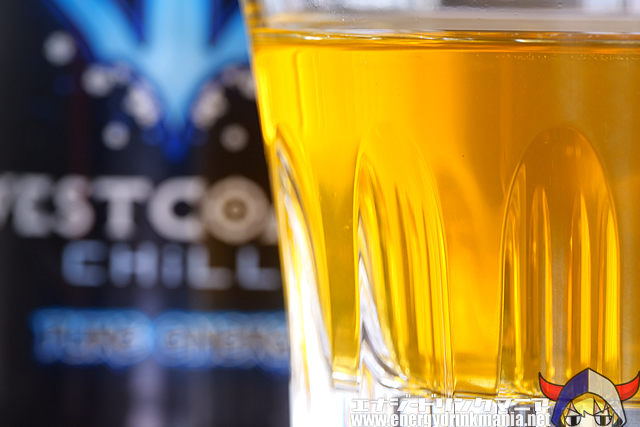
The moment it hits my tongue, an intense sourness spreads through my mouth, followed by a bitter, chemical-like taste. The chemical notes are surprisingly strong, and even after drinking, I can feel that bitter, chemical sensation rising from deep in my stomach.
It features a powerful chemical flavor comparable to Rockstar Original from back in the day (before PepsiCo acquired the brand in 2020). You rarely see such a strong chemical profile in recent products.
There’s none of the sweetness or richness typical of mainstream flavors, and it has a noticeable lightness often associated with zero-sugar drinks. Personally, I wish it had a bit more body.
Although the taste is quite unhealthy and chemical, the formula is unexpectedly health-conscious with zero sugar, zero caffeine, and not even artificial sweeteners. This surprising contrast is part of what defines WEST COAST CHILL.
The “PURE ENERGY” printed on the front of the can might be implying “free of impurities.”
Energy Ingredients of WEST COAST CHILL
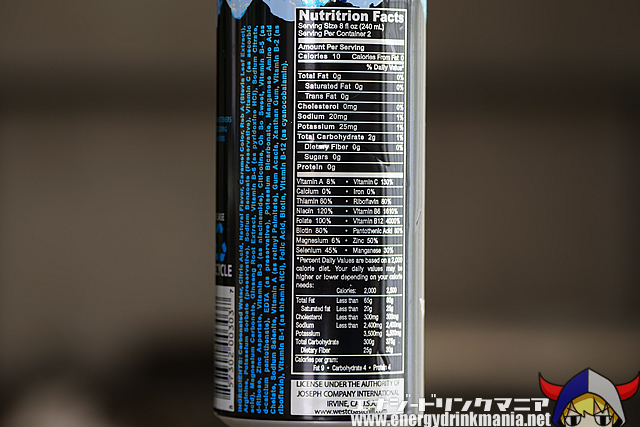
It contains arginine, ginseng, zinc, citicoline, and amino acids.
Being caffeine-free was one of WEST COAST CHILL’s defining characteristics, but I feel this point made it harder to be accepted as an energy drink in the U.S. back in the 2010s.
Zero sugar, zero caffeine, zero artificial sweeteners, zero coloring, zero artificial flavors. In a way, it was more than 10 years ahead of its time—and that’s partly why it didn’t succeed.
Design of WEST COAST CHILL
Its blue, glowing logo dusted with snow is striking. This dark, underground atmosphere paired with a cold impression makes for a one-of-a-kind design that perfectly matches the brand name “WEST COAST CHILL” and its product concept.
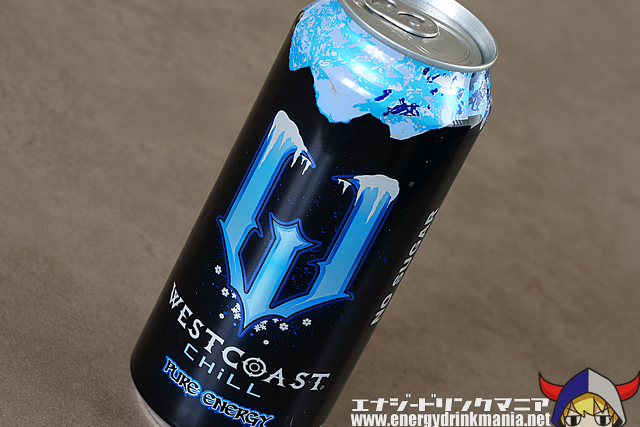
The top of the can features an illustration reminiscent of an ice cave, fitting well with the brand’s image.
The sides and back of the can list five “No” statements, highlighting its unique formula at the time.
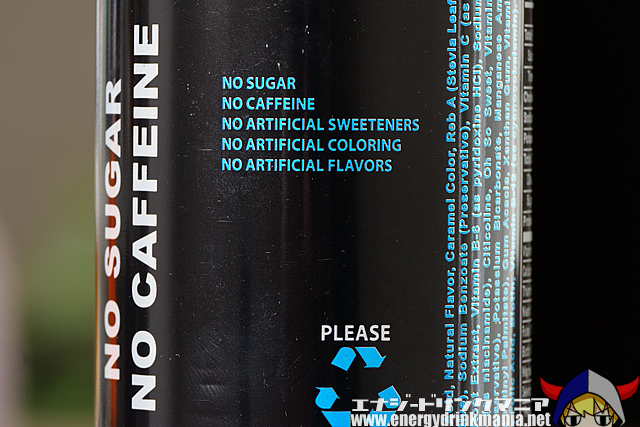
Caffeine-free energy drinks were extremely rare in the U.S. back then.
WEST COAST CHILL and Its Special Can
The WEST COAST CHILL reviewed here is one filled in a regular aluminum can—its final form right before the product was discontinued.
Originally, its biggest feature was the “Chill-Can,” equipped with an automatic cooling system activated by pressing a button on the bottom of the can. For years, from 2014 onward, I searched for the Chill-Can every time I visited the U.S., but I never managed to find one, and WEST COAST CHILL eventually disappeared.
This cooling system is one of the most groundbreaking inventions in American energy drink history, and the details deserve to be preserved as part of that history, so I’ve summarized them carefully.
Automatic Cooling System “Chill-Can” of WEST COAST CHILL
The instant-cooling “Chill-Can” system was developed by Joseph Co. International in the U.S. Here is a brief summary of how the Chill-Can used in WEST COAST CHILL came to be.
Development of the Chill-Can
The earliest Chill-Can used “HFC134A” as the refrigerant. However, HFC134A required special recovery when disposed of and raised environmental concerns, making mass production impractical. It was then replaced with activated carbon, but that made production too expensive. Eventually, liquefied CO2 was adopted, leading to the current system. This process reportedly took 25 years.
Joseph Co. International holds the patent for the Chill-Can, which cools the drink using a heat exchange unit inside the can combined with carbon dioxide from the air.
Push-Type and Twist-Type Chill-Can
The early Chill-Can models were activated by pressing the button on the bottom of the can.

Pressing this button starts the cooling process. Although the brand itself is gone, WEST COAST CHILL’s official YouTube channel remained for a time, allowing viewers to see how the cooling worked when the button was pressed.
The video shows the can at room temperature, the button being pressed with a hissing sound, and then the audience reacting with surprise when they feel how cold the can becomes.
Although WEST COAST CHILL never adopted it, the Chill-Can continued to evolve, and later models introduced a twist-type system where cooling begins simply by twisting the grip on the bottom.
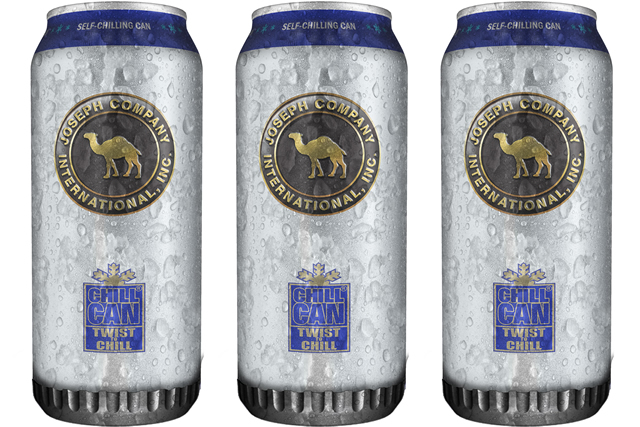
This redesign was made because the push-type system required significant force, and insufficient pressure could prevent the cooling from working properly. The twist-type system ensured reliable activation.
Chill-Can That Stays Cold for More Than 30 Minutes
Unlike refrigerated cans, Chill-Can cools the drink from the inside, which means the liquid warms up much more slowly, regardless of the outside temperature.
Instead of cooling from the outside like a refrigerator, it cools from within, chilling the surrounding liquid directly. According to CEO Joseph, the cold lasts “for more than 30 minutes.”
Although the Chill-Can was a groundbreaking invention, WEST COAST CHILL eventually shifted to regular aluminum cans. As a result, energy drinks with automatic cooling systems disappeared.
It seems that beverages using Chill-Can technology were still being released until around 2019, but they appear to be gone now.
Energy Drink-kun's Personal Rating
- Flavor

- Aroma

- Weight
- Freshness
- Munchiness
 Since 2001, Energy Drink Maniac has been drinking energy drinks and providing the most detailed reviews of global energy drinks based on firsthand research.
 1658 flavors reviewed.
 User reviews: 535 comments.
 The collection includes approximately 8,000 types of energy drinks from different countries, sizes, and designs.